 VUSMLE Vault←All guides
Plus the all-night version. Same 2 rules for both.
By Dr. Marish Asudani · Published
2 things. First, structure: a checklist, with the day divided into 10 hours and the task for every hour named. Second, make every hour produce a result. There are only 3 things you'll be doing: reading First Aid, watching videos and solving questions. Do each one properly, so UWorld gives you 70s and 80s instead of 40s and 50s, and you'll want to keep going.
Tap the version you need: a 10-hour day, or all night.
Read this firstMost people think studying 10 hours a day is about stamina. Coffee, willpower, more hours at the desk.
It isn't. If 10 hours of UWorld gives you 40s and 50s, no amount of coffee brings you back tomorrow. What brings you back is the score. So this page is about the 2 things that get you there: knowing what every hour is for, and doing each hour the way that works.
You need a checklist. Divide the day into 10 hours and know exactly what you need to do in every hour. When an hour has no task, you spend half of it deciding.
When your content is done, you get 7 days, 10 hours a day, before NBME 27:
Offline, because the online NBME gives you 50 questions in 75 minutes and inflates your score by 4 to 6%. Blocks of 20 in 30 minutes are the pace of the real exam. NBMEs offline →
Want a day-by-day schedule that tells you exactly what to study next? The Vault builds it around your exam date.
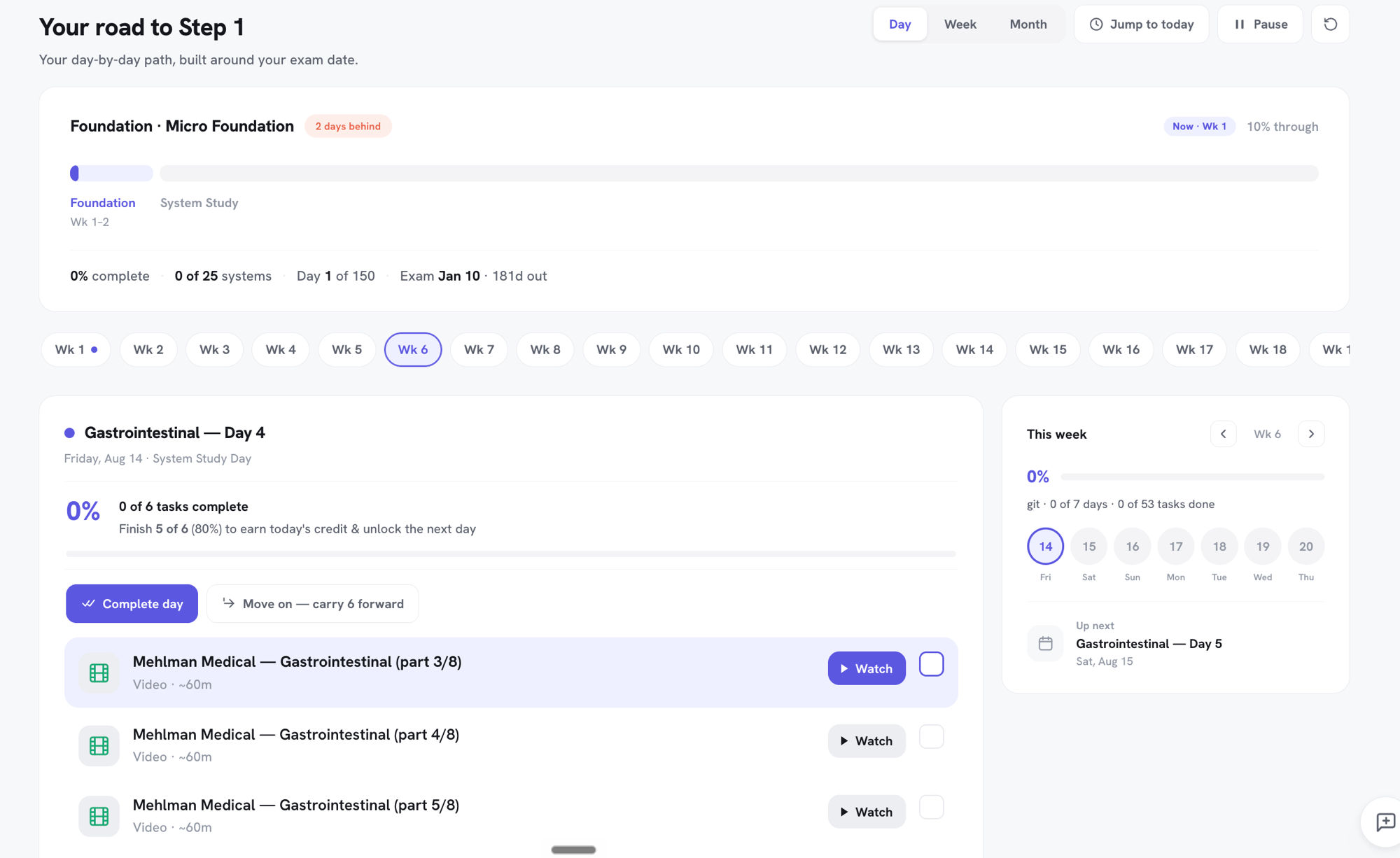 Build my schedule on usmlevault.com/schedule →
There are only 3 things you could be doing if you're studying 10 hours a day for the USMLE: reading First Aid, watching videos, or solving questions. Whichever one it is, do it the proper way. Tap the one you're doing:
If you want to do UWorld for 10 hours, you need to see great scores in UWorld, so that you actually keep doing it. If you get 40s and 50s, you won't want to continue. This is how you score 70s and 80s:
Recall the system before the next blockThe FA Foundation Anki for renal: every important First Aid line as a card. Opens straight into the deck.
Open the renal deck →You can read First Aid for hours if you're understanding it, not trying to memorise it. You're not supposed to learn First Aid on the first go. Read each page with the First Aid Guide:
On renal, that's about 10 to 12 minutes a page. Renal in 6 days →
Try 1 hour of it on renal, freeEvery renal page in the First Aid Guide, with its explanation and MCQs.
Open renal free →Watch Mehlman's videos, at most, and sometimes the YouTube video already linked on your First Aid Guide page. That's the list. Hours of random YouTube feel like studying and don't move your UWorld.
▶How to watch Mehlman Medical videos10 minutes, before your first playlist. ▶Mehlman · Renal playlistEvery system playlist is on the Mehlman guide.Every Mehlman system playlist → · the Step 1 playlists worth your time → · 10 YouTube videos instead of brainrot →
The checklist for tomorrow is ready tonight. You wake up and hour 1 has already started. Get tomorrow's checklist from the schedule →
Read this firstStudying all night isn't about coffee either. The same principles apply: a target, a structure, and work that gives you scores. If you get good scores, you'll keep going.
Before you open anything, decide what "done" means by morning: these pages, these blocks, this deck. A night without a target turns into a night of scrolling.
The same checklist as the 10-hour day. When it's 2 am and you finish a task, the next one is already written down.
40s at 2 am make you close the laptop. So at night, do UWorld only on a system you've already read, applied and recalled, and read First Aid to understand it, with that page's MCQs.