 VUSMLE Vault←All guides
For IMGs who can't face another round of revision. 1 swap for each thing you're bored of.
By Dr. Marish Asudani · Published
Usually what you're bored of is reviewing: the pages of First Aid, your NBMEs and your incorrects. For First Aid, switch to the FA Foundation Anki or the First Aid Guide, whichever you prefer. Then Mehlman's videos (not the PDFs) for your weak systems, and the Divine Intervention Step 1 PDF. For NBMEs and incorrects, don't review them by hand: do the NBME Booster Anki. Same content, different format.
Read this firstEvery student hits the day where they cannot read the same First Aid page one more time. Most of them stop. "I'll take a break," and the break becomes 3 days. Bored doesn't mean stop.
You could be bored. But look at what you're actually bored of. It's almost never the learning. It's the reviewing. What you have to review over and over again is:
That's the most difficult part of the whole prep. So here's a solution for each one, plus 2 free resources for when you need a change.
There are 2 ways to get through the same First Aid pages without reading them the same way again. Whichever you prefer, try it out. Both are ours, and both cover every page.
If you still want to revise the entire book and its exact lines, do it in active recall form. The FA Foundation Anki is every important line of First Aid turned into a flashcard. 2,499 cards, system by system, with the First Aid page number on every card. If you're bored and doing a system, just do that system's deck. Flashcards keep you answering instead of reading, and when a card makes you hesitate, you open that page.
▶How to do Anki from the FA Guide10 minutes. How to run the FA Foundation Anki cards properly.Try the FA Foundation Anki hereEvery important line of First Aid as a card, sorted by system. Opens straight into the deck.
Try it here →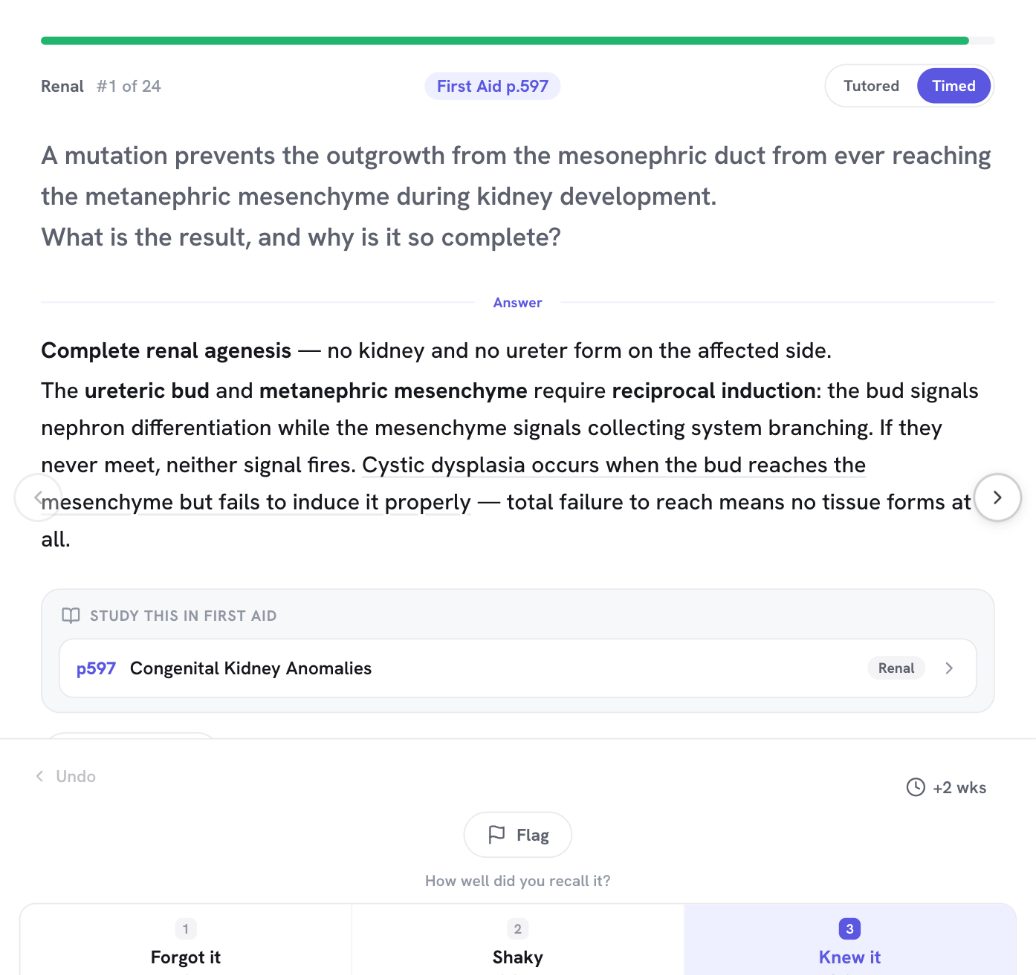
The First Aid Guide teaches you First Aid page by page: what to focus on, the concept walkthrough, the ELI5, how it's tested, and that page's MCQs, with the important video on the pages that need one. If you do the First Aid Guide, you can leave the First Aid book alone and just skim the pages afterwards.
▶Dr. AS on the First Aid Guide43 seconds. "Don't read it first. Read the guide, and then just skim through the pages."What's on every page: What the First Aid Guide is →
Try the First Aid Guide on renal, freeEvery renal page, its explanation and its MCQs. Opens straight into the renal pages.
Try it here →How to run a full First Aid pass with the deck: Which deck, when →
Bored of reading and of Anki? Then the first free resource: Mehlman Medical's videos. The videos, not the PDFs. Mehlman never bores you. He's very strict, and that strictness wakes you up and opens your eyes. When he calls out the exact mistake you were about to make, it stays stuck. Short videos, system by system, free. Pick the system you're weakest in:
▶Cardiovascular ▶Neurology ▶Renal ▶Respiratory ▶Gastrointestinal ▶Endocrine ▶Reproductive ▶Heme / Onc ▶Immunology ▶MSK ▶DermatologyWhy the videos: the PDFs have no repetition in them, and the videos teach you how the NBME thinks. How to run a playlist: How to use Mehlman Medical →
The second free resource. The PDF holds the high-yield Divine Intervention episodes for Step 1, over 127 of them, sorted by subject and organ system. For Step 1, Divine is the best video and audio podcast to use when you're bored and just need a refresher. His pronunciation of things makes him non-boring, it's unique, and it makes the point stick.
PDFDivine Intervention Step 1 PDFFree on usmlevault.com/free-resources. Play the episodes for the system you're on. ▶Divine Intervention · USMLE Step 1 playlistHis Step 1 episodes on YouTube. Use the PDF to pick which ones.Which episodes, and when they help most: The Divine Intervention guide →
Revising your NBMEs is tedious. Going through your incorrects is tedious. Just do the NBME Booster Anki.
It's every NBME form from 20 to 34 and the Free 120, broken down topic by topic into 1-line cards, with the explanation underneath, sorted by system. So instead of reopening old forms, you revise what those forms actually asked, one card at a time.
Try the NBME Booster Anki hereForms 20 to 34 and the Free 120, sorted by system. Opens straight into the deck.
Try it here →Why it exists and what's inside it: The NBME Booster → · the full review routine: The NBME Review Protocol →
A very high-yield collection of his videos, system by system, which you can study when you're bored. Not just biostats: cardiovascular, CNS, psychiatry, ethics, biochemistry. It's built as revision, so it works best once you've covered a system.
PDFThe Neil Randy PDFFree in the Vault University ▶Neil Randy · Behavioral Health playlistThe one almost nobody watches. A good place to start.The Rahul Damania Step 1 playlist, the NBME high-yield Step 1 playlist, or Systemize. He goes system by system through the concepts the NBME keeps testing. Search "Top NBME Concepts USMLE Step 1" on his YouTube channel and open the system you're on.
More playlists for days like this: the full 10 Step 1 playlists →
On Step 2 CK? The same idea, with AJmonics, Mehlman, Divine and Dr. High Yield: the Step 2 CK list →
Want a day-by-day schedule that tells you exactly what to study next? The Vault builds it around your exam date.
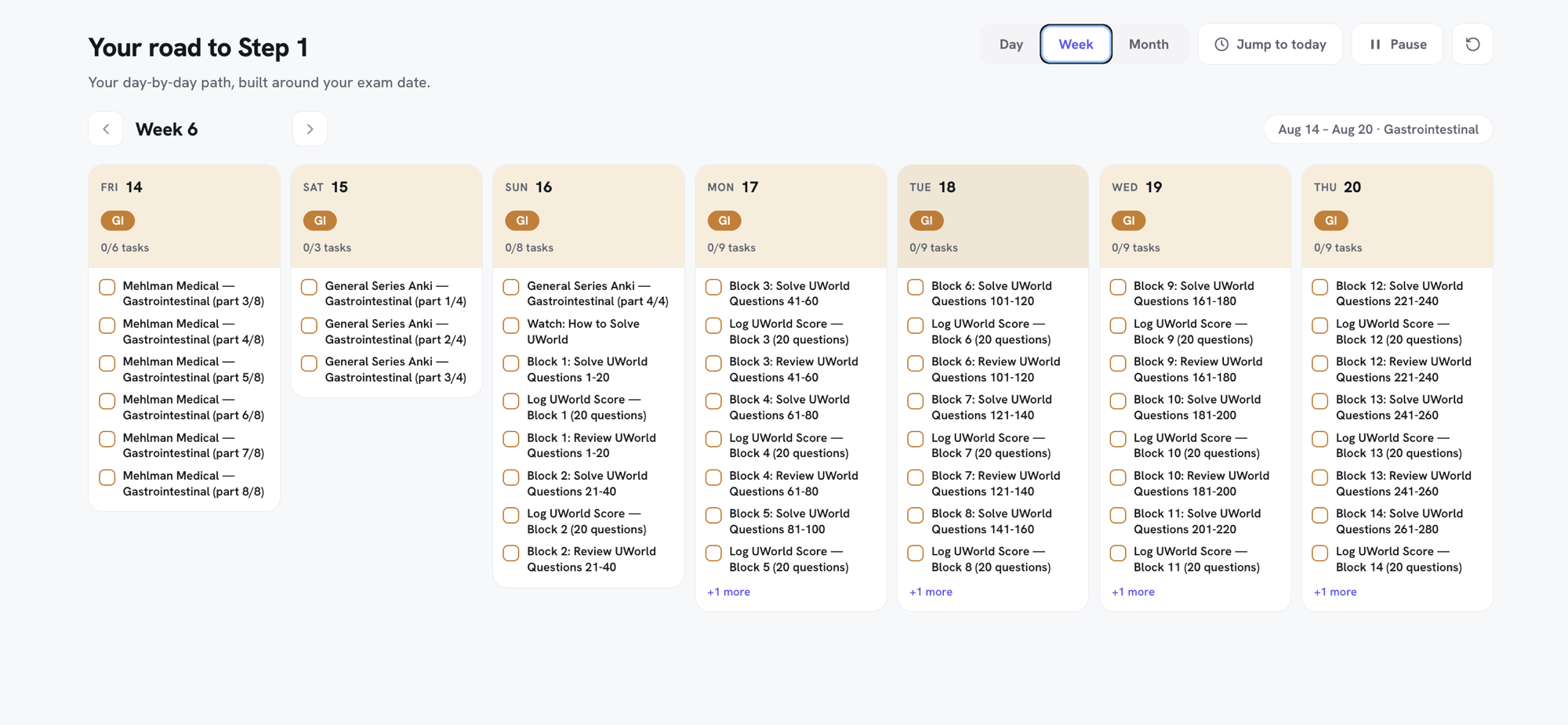 Build my schedule on usmlevault.com/schedule →
Things you can study in the gym — Step 1 and Step 2 CK.
6 playlists = 6% growth — the Step 1 playlists worth your time.
YouTube instead of brainrot — 10 videos per list.
The accountability system — hard goal, hard date, daily tasks.