 VUSMLE Vault←All guides
Graduated years ago, working full time, and wondering if you can still do this. You can. Here's the structure, and the old IMGs doing it right now.
By Dr. Marish Asudani · Published
When you're starting out, you need consistency and motivation. Motivation comes from good scores, and from knowing you can get them again. That comes from structure. Most old IMGs are working, so you don't have time to think about what to study. Follow 1 fixed structure for every system: Active Reading of First Aid with the First Aid Guide, Active Application with Mehlman's videos, Active Recall with the FA Foundation Anki, then UWorld in blocks of 20, tutor mode, untimed. Try it on renal for 6 days at 7 to 8 hours a day, pick your exam date from the hours you really have, and keep First Aid and Anki on your phone.
The 7 tips are how you start. The second tab is the old IMGs doing it right now, and the ones who already passed.
Read this firstI know most of you are working.
I know because I've had more than 20 old IMGs in my mentorship, the oldest a physician from the 1990 MBBS batch. I understand how difficult it is for all of you to study: a full-time job, and a book you closed years ago.
When you're starting out, you need 2 things: consistency and motivation. Motivation comes from good scores, and from knowing that you can do it again. And that comes from structure.
For old IMGs there's one more problem. You don't have time to think. If you come home from work and spend the first part of your evening deciding what to study, the day is gone. So the structure has to do the thinking for you.
The structure has 2 jobs: tell you what's next, and get you scores. Without it, even if you get good percentages, you will always falter, because you don't know what to do next.
Mine is the same for every system:
Don't open biochemistry or cardio first because they feel important. Micro and pharm first, then renal, because it's easy and builds momentum. Cardio comes last, and biochem goes in small pieces, each one right before the system that needs it.
▶Step 1 mentality20 minutes. The mindset and approach before the structure.Read next: the First Aid method · the RPSR method · how to use Mehlman
If it's been years since you opened First Aid, don't plan 6 months on day 1. Do 1 system my way. Do renal like this for the next 6 days, and then come and tell me you can't stay consistent.
The point of this week is to see a score you didn't think you could still get. That one score is what makes you open the books tomorrow.
These 6 days are built on 7 to 8 hours a day. That's what renal takes at those hours: 6 days. Fewer hours? Keep the same order, and let the days stretch.
▶How to do the renal system15 minutes. My walkthrough of these 6 days.Done the 6 days? Come and tell me how it went: book a free 30-minute call →
Read next: Renal, start to finish, in 6 days (every step in full)
A hard date is what keeps you studying hard. Step 1 is pass or fail, so you need a target date, not a target score. If you're working, be honest about your hours, not the hours you wish you had:
Dr. S, a 55-year-old urologist in the US, studies 5 to 6 hours a day, and is scoring 85% and 100% on UWorld blocks. See the screenshots →
Read next: when you're actually ready to give it
When I did Step 1 during internship, my study hours never came as 1 block. They came 40 minutes at a time, between rounds, plus a 2- to 3-hour block after work. A job works the same way.
The Sketchy Micro PDF and the High-Yield Pharmacology PDF are both free on usmlevault.com/university.
Dr. SJ works too. The day he joined, he told me: "I can manage 6–8 hours easily on week days." From September, his hospital days cut that to 4 hours on Mondays and Wednesdays. He kept the same structure on the short days, and kept sending scores. See them →
Read next: Step 1 in 14 weeks during internship · how to run the decks
After a day at work, you won't have the energy to plan. The night before, you should already know tomorrow's tasks. Knowing exactly what comes next prevents procrastination and prevents uncertainty. The moment you finish a task and don't know the next one, you pick up your phone.
That's what usmlevault.com/schedule does. You put in your exam date and your hours, and it builds the plan, with daily tasks you tick off.
Want a day-by-day schedule built around your working hours? The Vault builds it around your exam date.
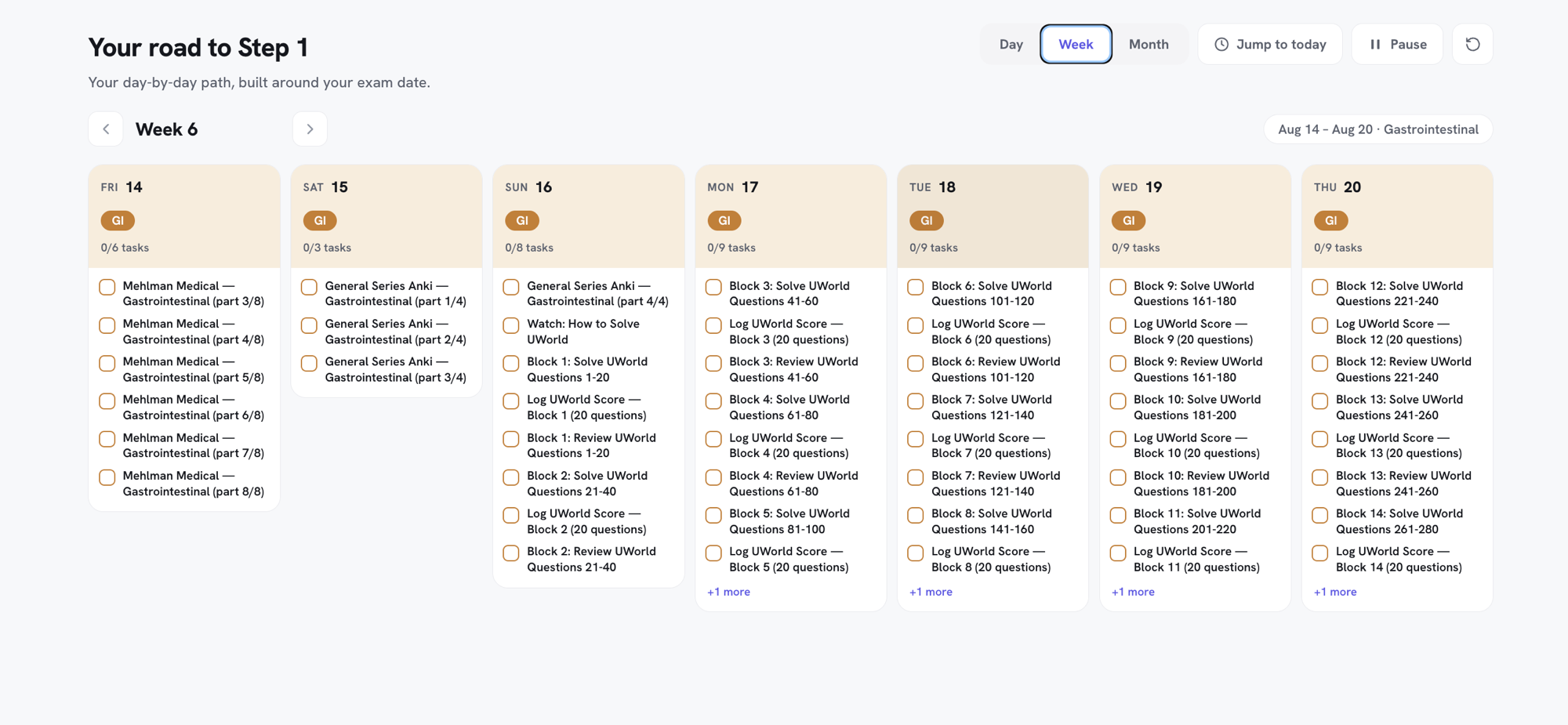 Build my schedule on usmlevault.com/schedule →
If you keep taking breaks when you don't need them, the cadence breaks, and the consistency breaks with it. Only take a break when you actually need one: when you are burnt out.
And when you do take that break, never feel guilty about relaxing.
Content first. Your first NBME comes at the end of your content plan, not in week 3.
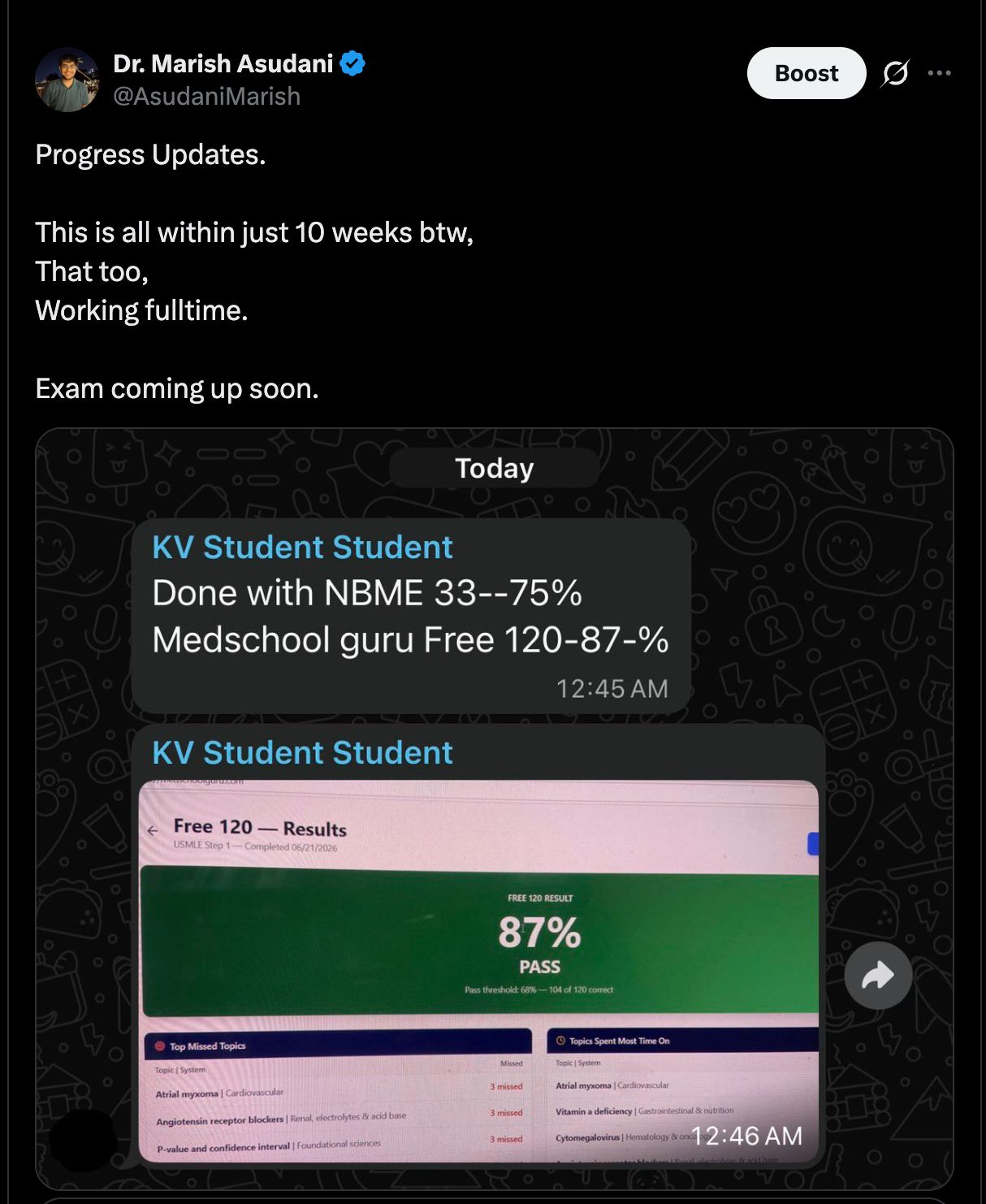
Then book the exam when your scores say so: above 68% on NBME 31, 32 and 33, every one of them taken offline.
Read next: the NBME order · how to know you're actually ready
Read this first"Am I too old for this?"
There's no age limit on the USMLE. These are old IMGs in my program right now, and the ones who already passed.
The ones in the program now are just 8 weeks in, and have almost completed 70% of the syllabus.
Dr. S is a 55-year-old urologist in the US, and an old IMG who is smashing it right now. 5 to 6 hours of study a day. 2 blocks a day, 20 questions each.
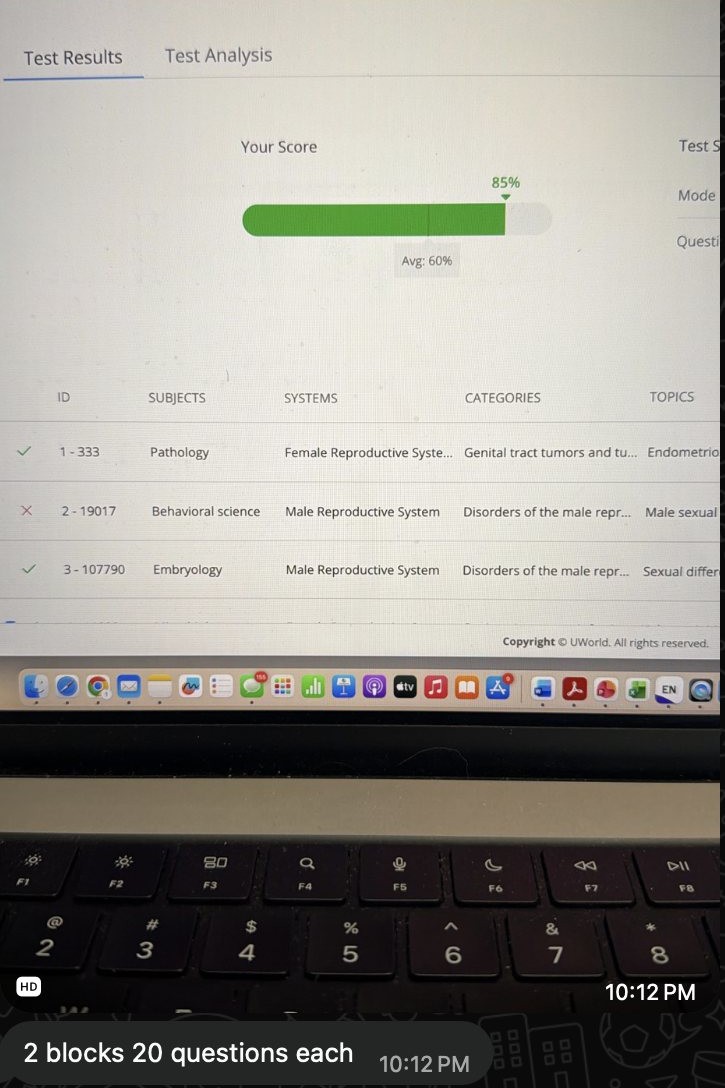
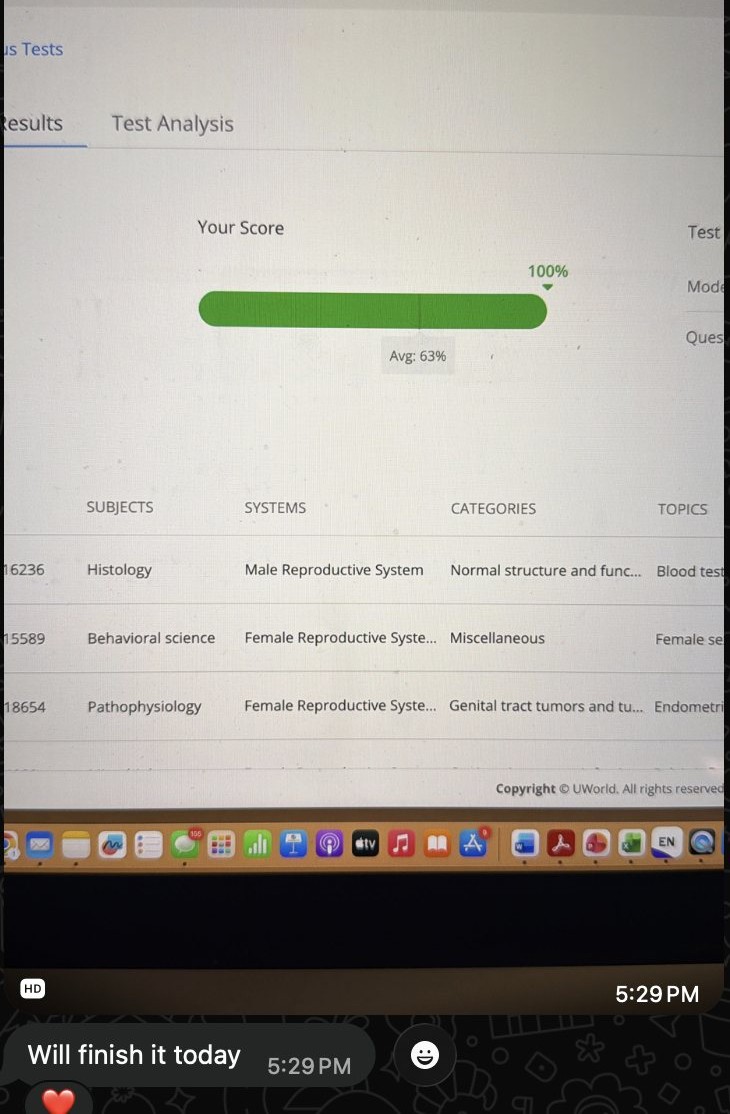
Dr. SJ joined on 19 August 2026 with a job and a UWorld average of 63%. He follows the same rule for every system. GI and renal were the first 2 done, in 5 days each. Every system after that runs the same way, so there's never a morning spent deciding.
4 to 5 days a system. Respiratory, MSK, psych, neuro, repro, endocrine, immunology, heme/onc, and cardio last.
His UWorld blocks, system by system, from the screenshots he sent me after every study day:
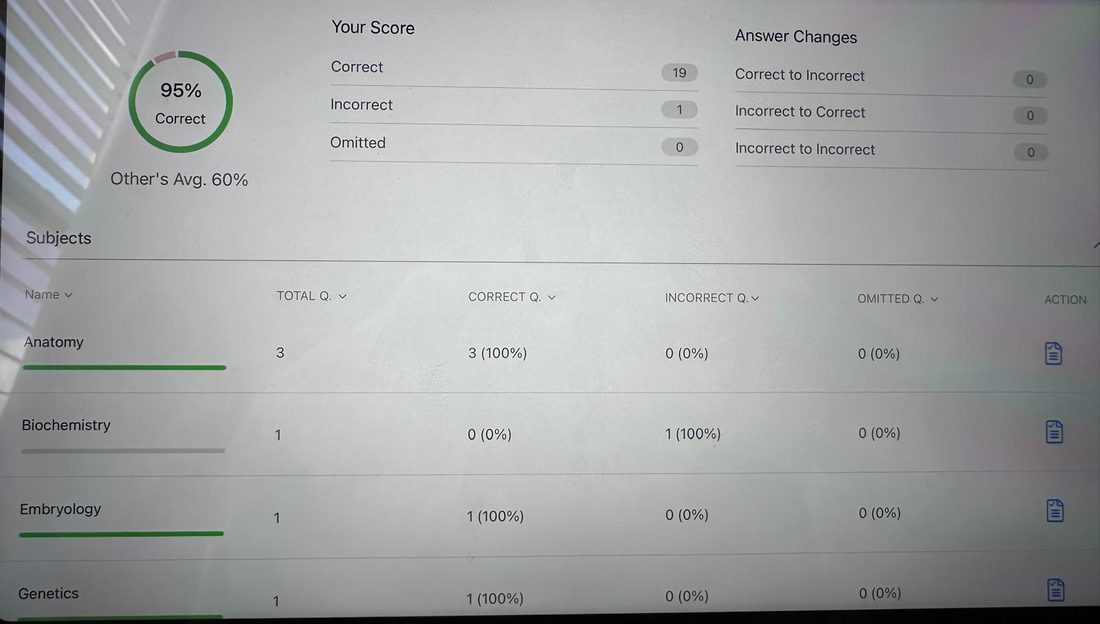
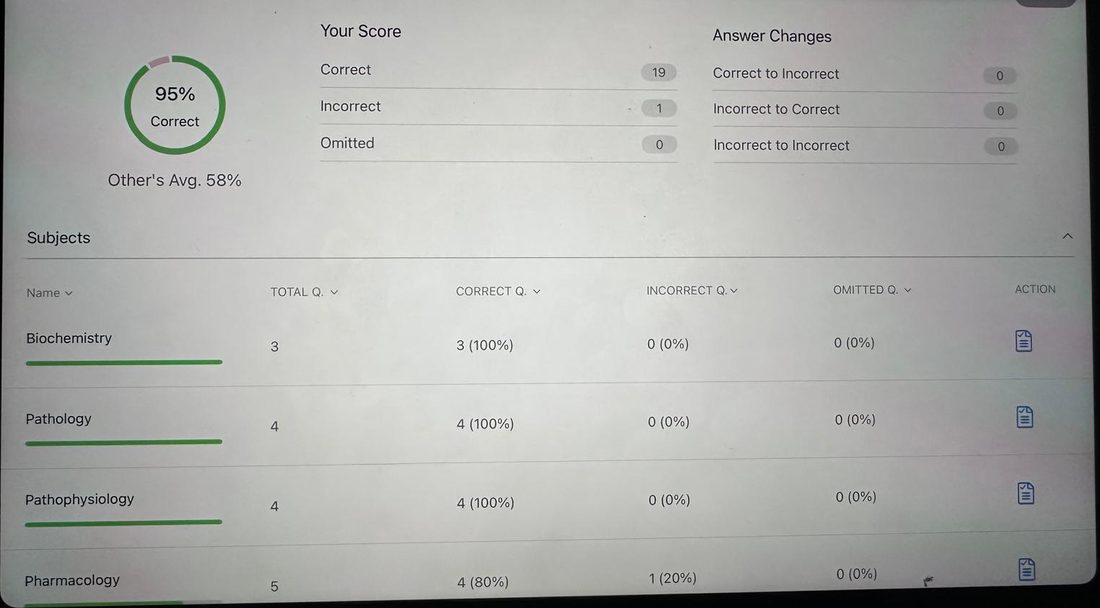
Dr. M joined on 25 September 2026. Her NBMEs before she joined had stalled between 60% and 68%. Renal was done in 4 days. Then she ran the same structure on every system, and the scores stopped stalling: 19 blocks in a row at 80% or above, across GI and MSK.
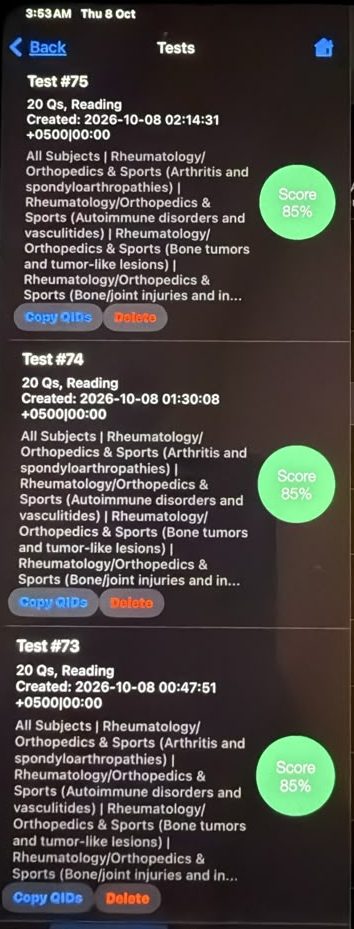
Dr. MA started on 13 September 2026, with micro first. Viruses, parasites and fungi took her first 4 days, and the bacteria were done on 18 September. Then renal, respiratory and MSK, 1 system at a time.
She had practised as a physician in Iraq, then spent 2 years trying to get through Step 1 on her own. She joined in March 2026 and passed on her exam date, 2 October 2026.
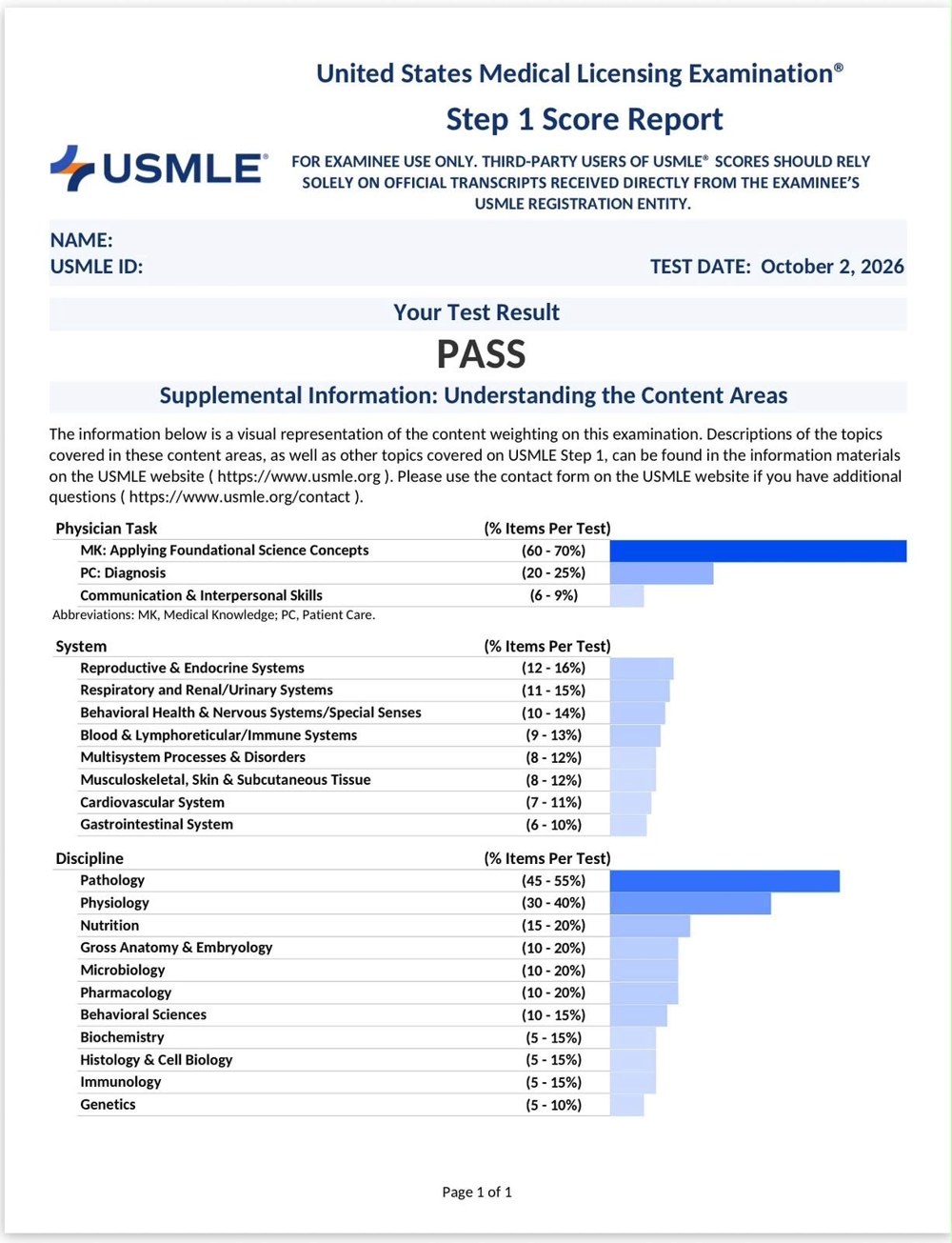
Years after medical school, he was doing his MPH in the US, with a green card interview right in the middle of his preparation.
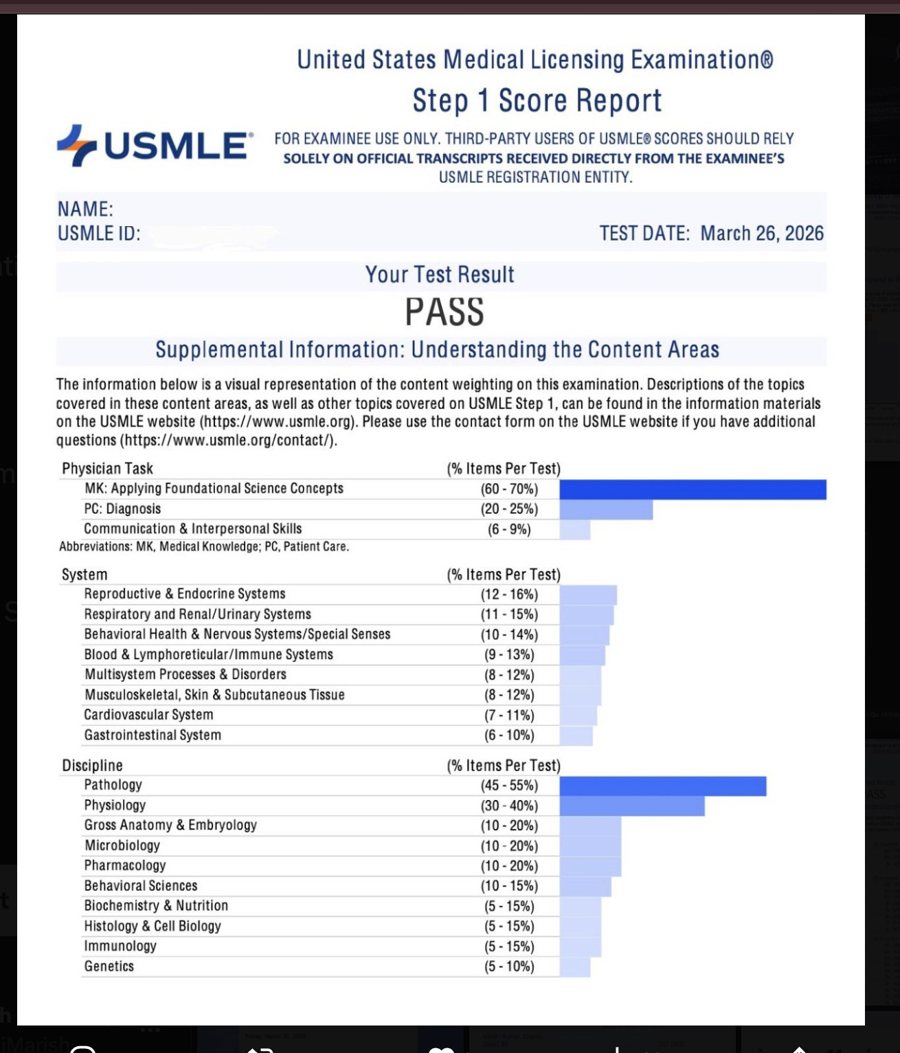
He finished his MBBS in India in 2023 and was working full time as a physician in the UK's NHS. He passed Step 1 12 weeks after starting, without stopping work.
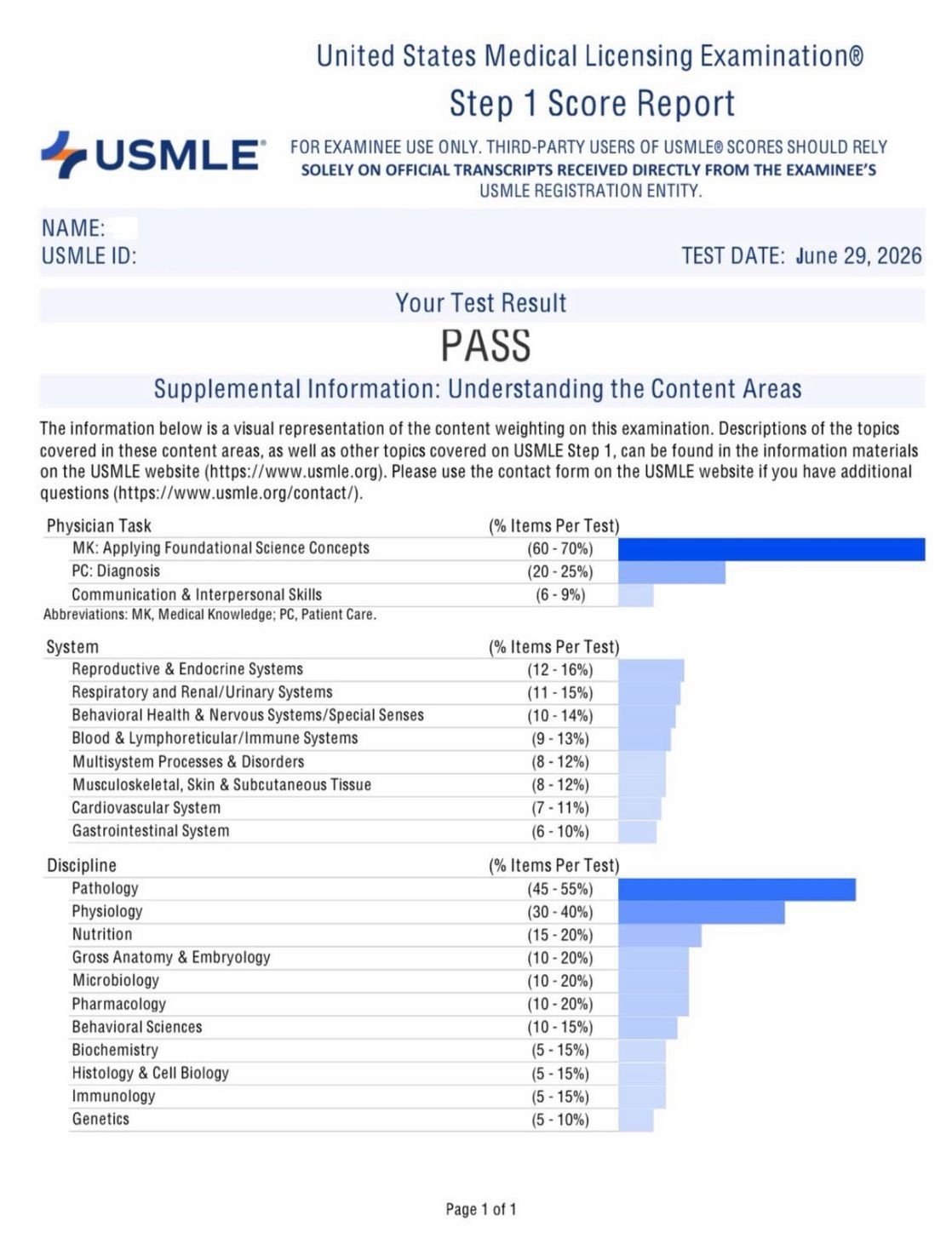
Then Step 3: 241, on 14 September 2026.
How to actually stay consistent — the 4 tips and 10 habits this page is built on.
Old IMGs who passed — their full stories.
The Second Attempt program — if you've already given it once.
Renal in 6 days — the first system, in full.